

I · The Maker/II · The Object/III · The Archive/IV · Acquisition

Room I · The Maker
Breguet was founded in Paris in 1775 by Abraham-Louis Breguet, whose self-winding Perpétuelle of the 1780s was among the first watches to wind from the motion of daily wear. This No. 2176 belongs to the house's own twentieth-century revival of that invention, its movement built by Les Fils de V. Piguet in the Vallée de Joux, the workshop then supplying Patek Philippe's most demanding commissions.
The Object
The self-winding watch Breguet invented in the 1780s, built again by the house itself a century and a half later. An 18ct gold Perpétuelle with a platinum winding weight, its running reserve read off the dial.
An open-face watch in 18ct gold, 48.34mm across and 91.1 grams in the hand, engine-turned across the bezel, the band and the hinged back that lifts to the movement, the back worked around a plain polished cartouche, with the pendant and bow left in polished gold. It is a Perpétuelle, a watch that winds itself from the motion of being carried, and that word is the whole story.
Self-winding was Abraham-Louis Breguet's founding trick, the invention that made his name in Paris in the 1780s, and for most of a century afterwards the house let it rest. Then, in 1921, Sir David Salomons published his monograph on Breguet and reminded the world, and the firm itself, of what the old man had actually done. In the years that followed, the house answered with a small run of new Perpétuelles built in honour of its own beginning, and this is one of them: No. 2176, made around 1930, bracketed in the series by No. 1648 of 1928 and No. 2492 of 1932. The movements for the run came from Les Fils de V. Piguet in the Vallée de Joux, then trusted with the most demanding complicated work in Switzerland.
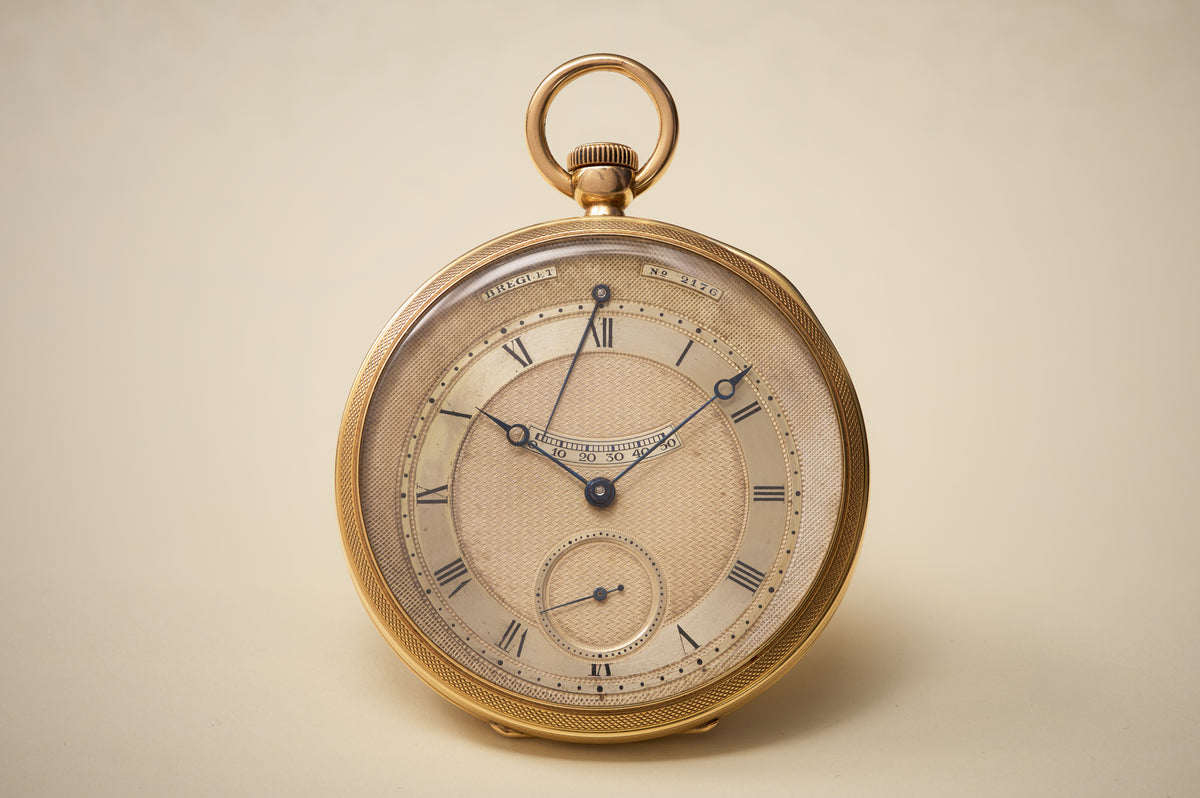
The silvered dial is guilloché throughout, worked in a tighter weave at the centre than the case carries, with a plain satin band holding the Roman hours and a beaded minute track just inside it. Hours and minutes sit a little high of centre, read by blued steel hands in the moon-tipped Breguet pattern, and beneath them a separately pivoted hand sweeps an arc graduated to fifty, showing how much running reserve the motion of the day has stored. A subsidiary seconds turns in its own guilloché ring at six.
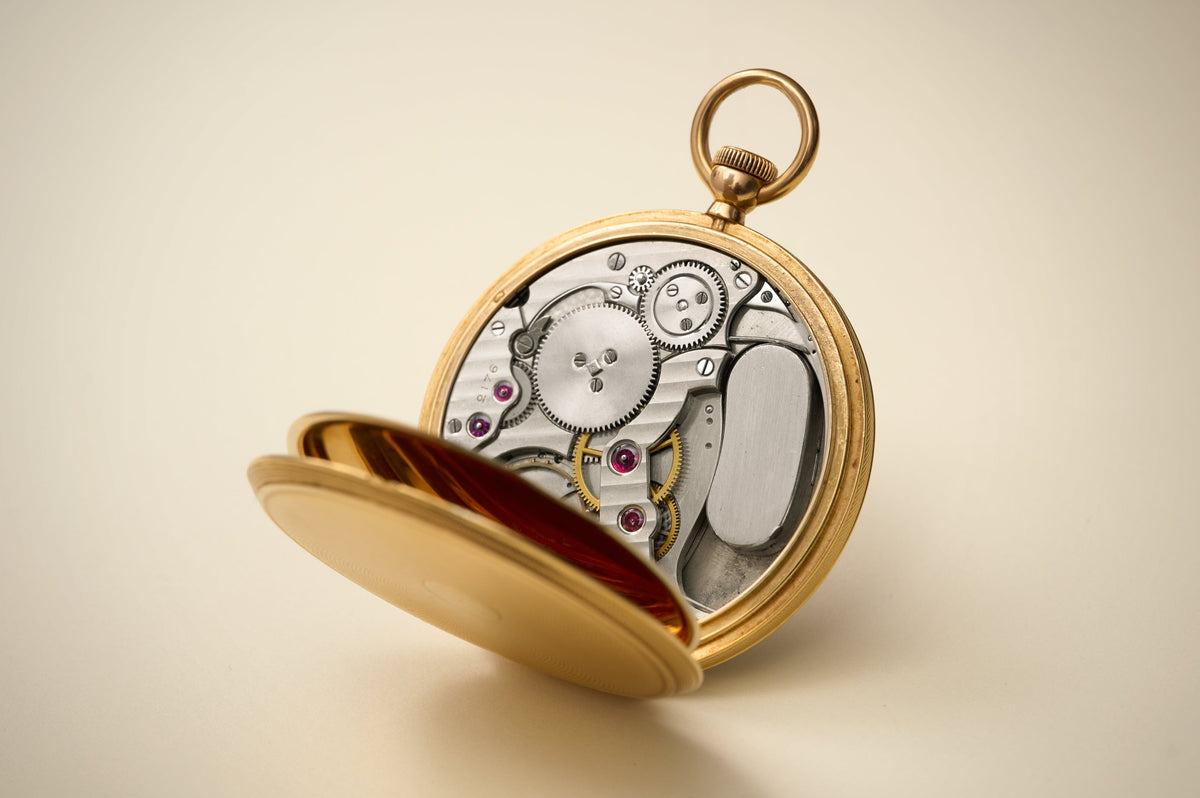
On the other side of the hinged back, the self-winding weight rides on its own pivot at the top of the movement, and it is cut in platinum: the densest metal for the job, on a watch whose whole purpose is that weight's quiet travel. It winds and sets correctly from the gold pendant crown, and it runs well.
The house's own registers know this watch: sold new on the 21st of February 1933 to a Monsieur Lenoir, for 10,000 francs. It has come through the ninety years since complete, matching and original, the number struck on caseback, cuvette and movement, and the caseback's central cartouche, the panel left for an owner's monogram, never engraved.
The marks, the movement and the condition are set out piece by piece in the drawers below; the register entry, confirmed by the house, is set out in The Archive.
Beneath the case
Open each drawer to look closer
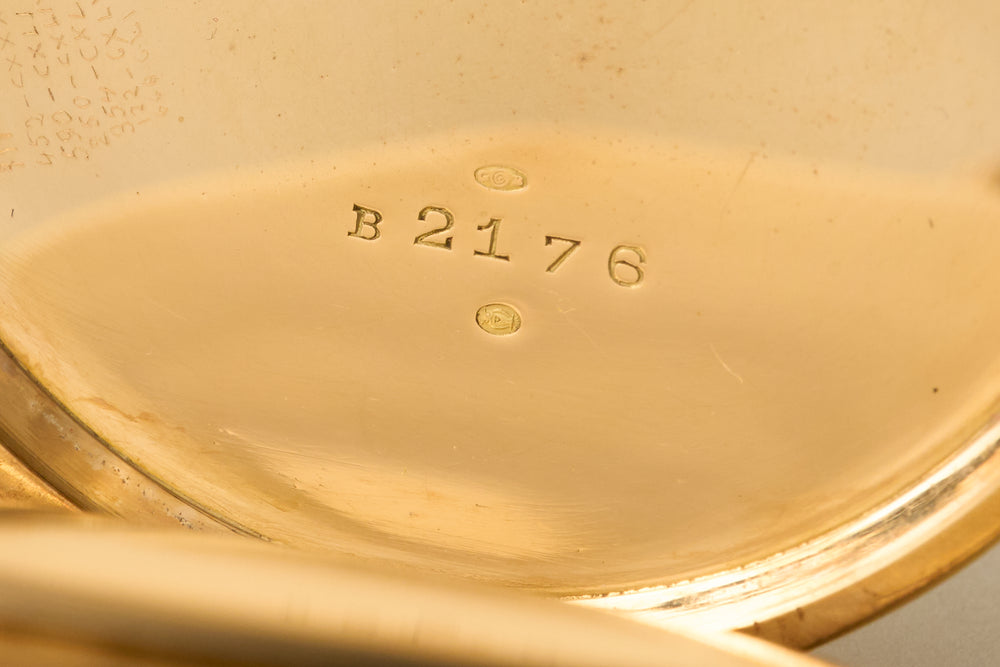
Mark 1
Owl, French import mark
The French control mark struck on gold brought into France for assay, in use from 1893.
gold
import
Mark 2
Breguet sponsor's mark
A lozenge with the initials G B divided by a swirl, the responsibility mark Breguet registered for its interwar production.
maker
Mark 3
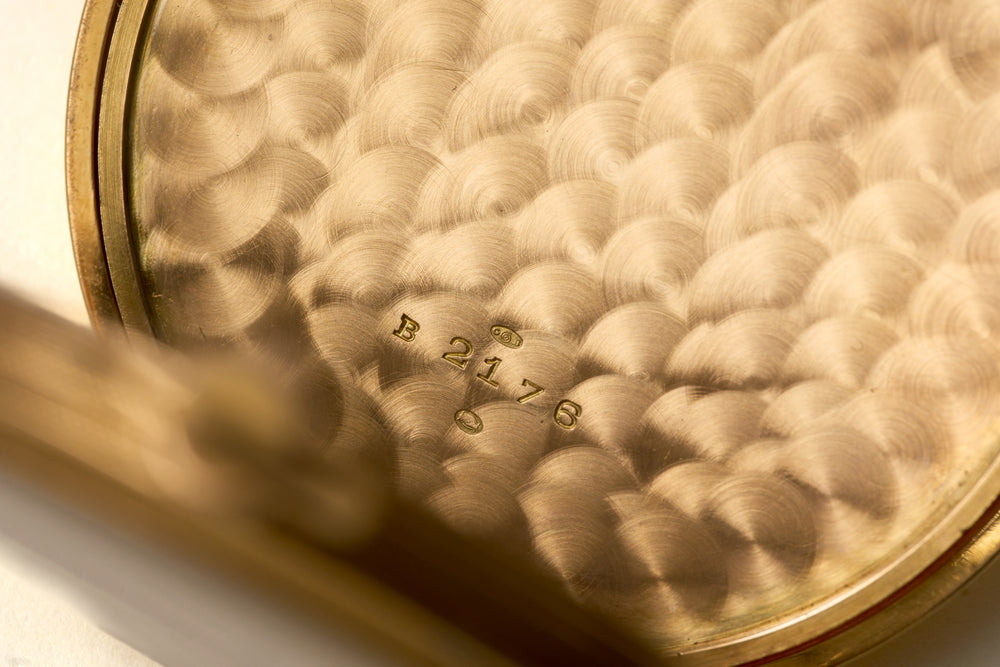
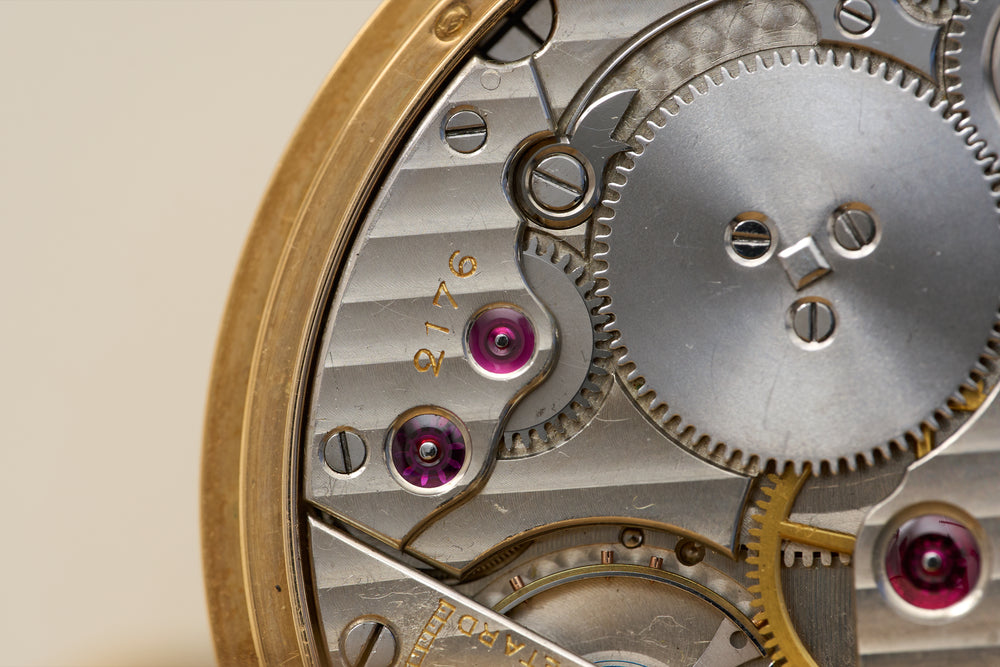
Case number B 2176
The case number, matching the dial and the movement.
number
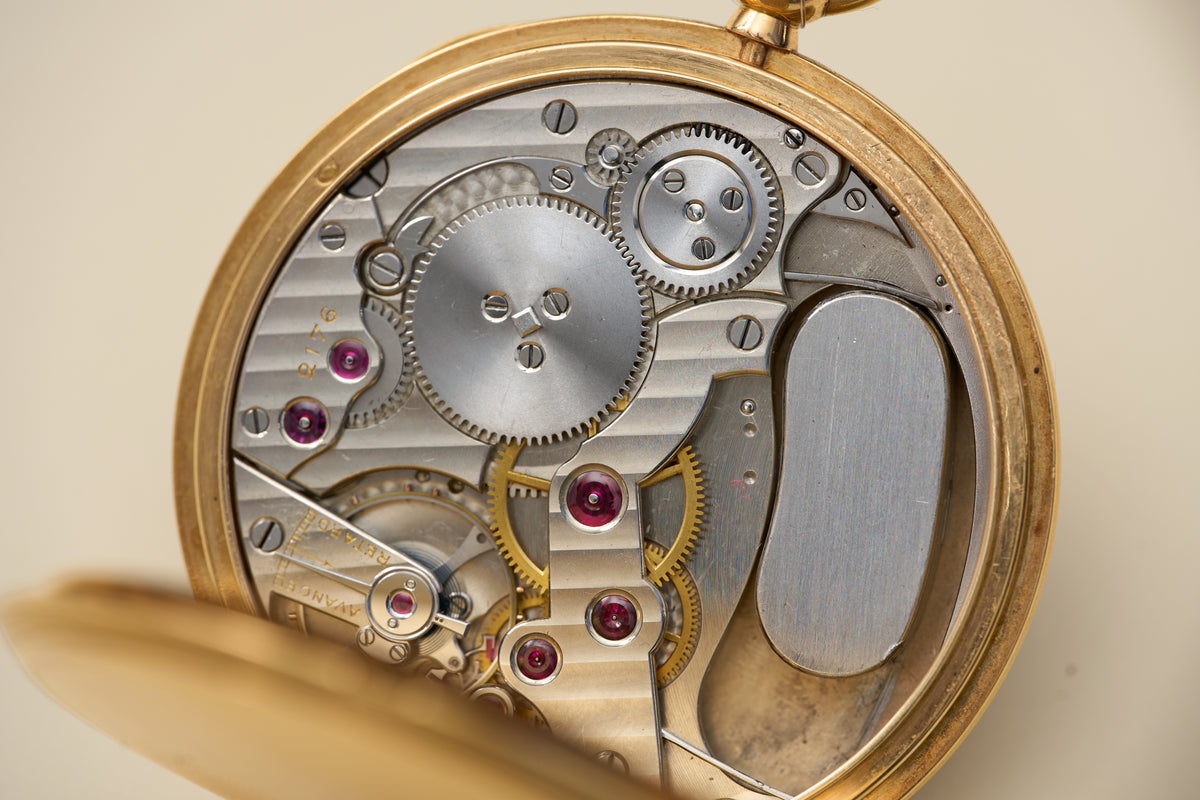
- APlatinum winding weightThe self-winding mass, cut in platinum for its density, riding on its own pivot.
- BCôtes de GenèveThe bridges finished with the diagonal Geneva stripe.
- CAvance / Retard regulatorThe regulator signed in the French convention, adjusted along a graduated arc.
Case
Excellent
18ct gold, engine-turned over bezel, band and back with a plain polished cartouche at the centre of the back, polished pendant and bow; free of cracks, scratches and dents, unpolished in appearance.
Dial
Excellent
Silvered guilloché, clean and original.
Movement
Excellent
Self-winding Perpétuelle with côtes de Genève finish; winds, sets and runs correctly.
Crystal
Excellent
Original and intact.
Crown
Excellent
Gold pendant crown, winds and sets correctly.
48.34
This watch
25.75
€2 coin
A €2 coin is 25.75 mm. This case is more than two and a half times its area.
Room III · The Archive
Recorded in Breguet's registers, sold new in February 1933
Breguet's own sales registers, confirmed in writing by Emmanuel Breguet, head of patrimony, record No. 2176 as a 19-ligne self-winding Perpétuelle with a gold case and a platinum winding weight, sold new in February 1933. The number appears on the dial, the case and the movement.
- Maker
- Breguet (No. 2176)
- Model
- Self-winding Perpétuelle, open-face pocket watch
- Case
- 18ct gold, open face
- Diameter
- 48.34mm
- Weight
- 91.1g
- Movement
- Self-winding Perpétuelle, jewelled, côtes de Genève finish
- Complications
- Self-winding Perpétuelle, power reserve indicator, subsidiary seconds
- Dial
- Silvered guilloché, Roman numerals, blued Breguet moon-tip hands
- Country
- France (movement Vallée de Joux, Switzerland)
- Hallmarks
- French owl import mark (gold); Breguet 'G B' sponsor's mark; case no. B 2176
- Serial
- 2176 (dial, case, movement)
- Period
- C.1928-1932
The Estate Collection
Room IV · Acquisition
Sold
We’d love to discuss our passion for this piece with you.


Breguet
Sold
Enquiry
The Perpétuelle
×