

Notes from the workshop.
Stories behind the pieces: the makers we admire, the marks we decode, and what a hundred years does to a good watch.
Longer reading. The houses we admire, the pieces that have passed through our hands, and the histories behind them.

The House of Stern: The Dial Makers Who Bought Patek Philippe, 1898-2016
The most famous watchmaker in the world belongs to a family of dial makers. The story of Stern Frères, from a Geneva enamel workshop in 1898 to the rescue of Patek Philippe in 1932, told through the family's own marks...
Read the story ›
Ulysse Nardin: The Pursuit of Precision, 1846-1982
The story of Ulysse Nardin, from its founding in Le Locle in 1846 to a century of dominance in observatory chronometry. Told alongside four documented Neuchâtel...
Read ›
The Repeater Watch
Before the electric light, telling the time in darkness meant lighting a candle, or owning a repeater. A mechanism that strikes the hours, quarters, and minutes...
Read ›
Three Eras, Three Sensibilities
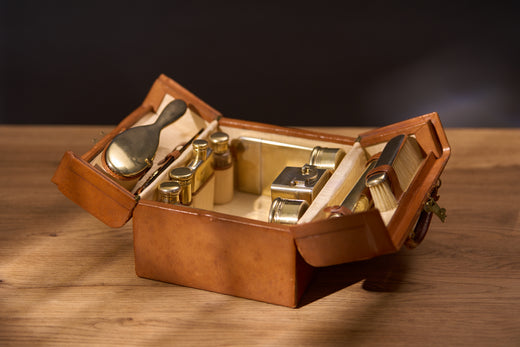
A pocket watch does not exist in isolation. It was carried alongside other objects, displayed in objects made for it, given as part of sets that...
Read ›Reference for collectors. How to read a hallmark, date a movement, and make sense of the marks inside the case.
Dating a Pocket Watch by Its Serial Number
Year-by-year serial number tables for Elgin, Waltham, Omega and Longines movements, with the caveats that go with each, and why we do not print...
How to Read a Hallmark
The five marks inside an English watch case, how to read them, and the full London, Birmingham and Chester date-letter tables from 1776 to...