

I · The Maker/II · The Object/III · The Archive/IV · Acquisition

Room I · The Maker
L. Leroy & Cie, reconstituted by Louis Leroy in 1889, was the most decorated French watchmaker of the Belle Époque: Grand Prix at the 1900 Paris Exposition, chronometers to the French Navy, and the Leroy 01, the most complicated watch in the world from 1904 to 1989. This chronograph is that house at its height: a column-wheel movement finished to Leroy's own standard and sealed in the firm's patented anti-magnetic screen. It is signed work by the maker, not a name on a bought-in calibre.
The Object
A factory-documented 1913 chronograph by the finest French house of its day, protected by Leroy's own patented anti-magnetic screen. Sold new to a named Parisian owner, running perfectly, still in its original 18ct gold.
The enemy of every fine watch in 1913 was invisible: magnetism, seeping from the new century's dynamos, motors and electric lines, quietly ruining balance springs. Louis Leroy had patented his defence years earlier, and this chronograph carries it, the whole movement enclosed in the firm's anti-magnetic screen, an armour most makers never attempted. The inner cover is stamped for the patent, and a copy of the 1906 patent document travels with the watch.
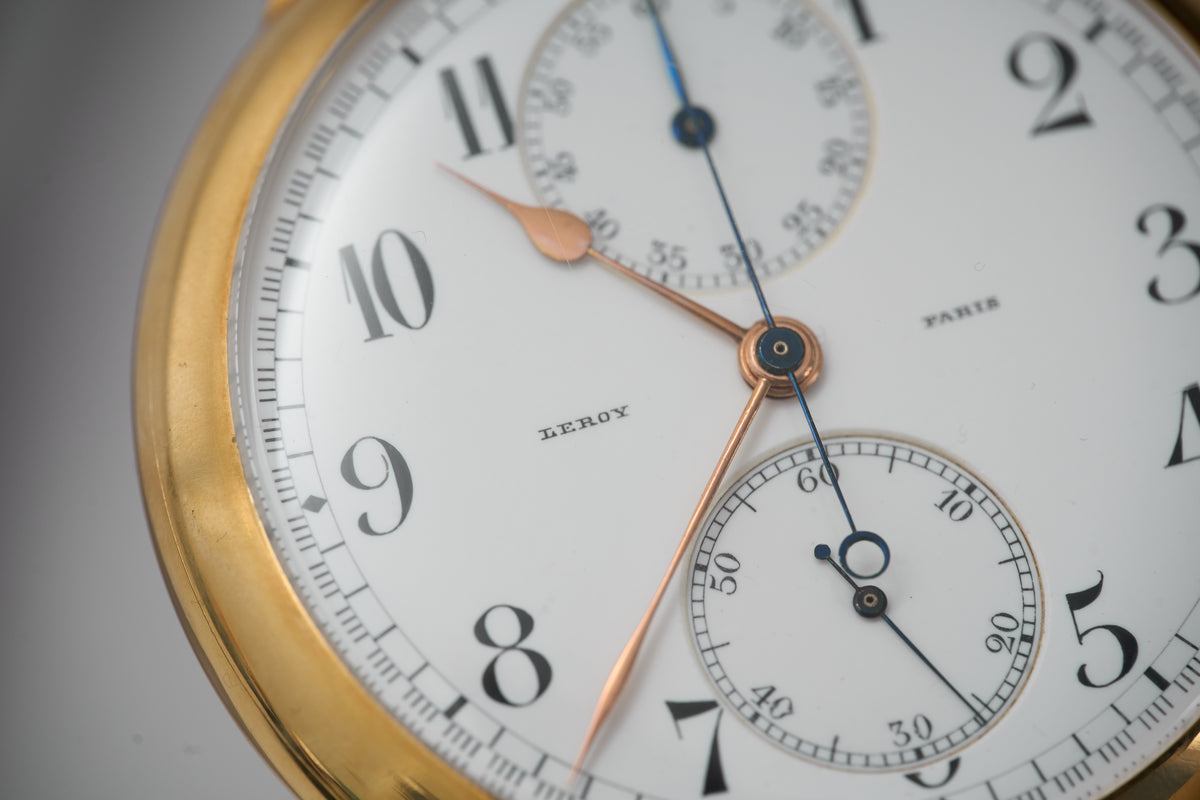
Around that idea Leroy built a chronograph of real grandeur: 18ct gold, 51.9mm, 106.9 grams, with a flawless white enamel dial signed Leroy Paris, slim Arabic numerals, an outer fifths-of-a-second track, an instantaneous sixty-minute register at twelve and running seconds at six, read against rose gold poire hands with the chronograph work in blued steel. The chronograph works through the crown, starting, stopping and returning to zero without hesitation, and the watch winds, sets and runs cleanly.
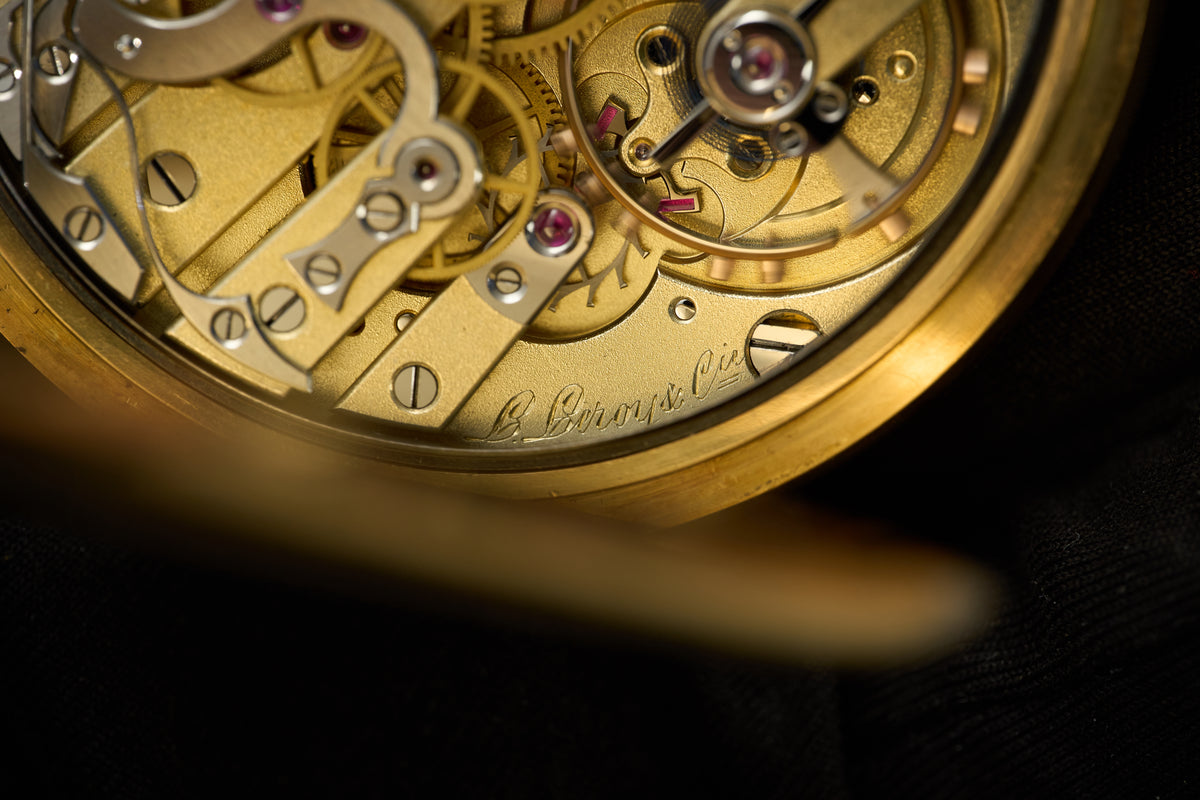
The house behind it was the most decorated French maker of its day, and this piece shows the workshop at full stretch: a column-wheel movement finished in gilt with ruby jewels in gold chatons, sealed inside its screen like an instrument in its case.
And the watch is documented to the day. Leroy's own ledger records it, names its first owner and the Paris street he lived on, and prices the sale in the francs of the summer of 1913; the entry is set out in The Archive below. The gold shows only light hairlines from a century of careful carrying, the crystal is sound and the crown secure.
The marks, the movement and the condition are set out piece by piece in the drawers below; the ledger entry and the patent are set out in The Archive.
Beneath the case
Open each drawer to look closer
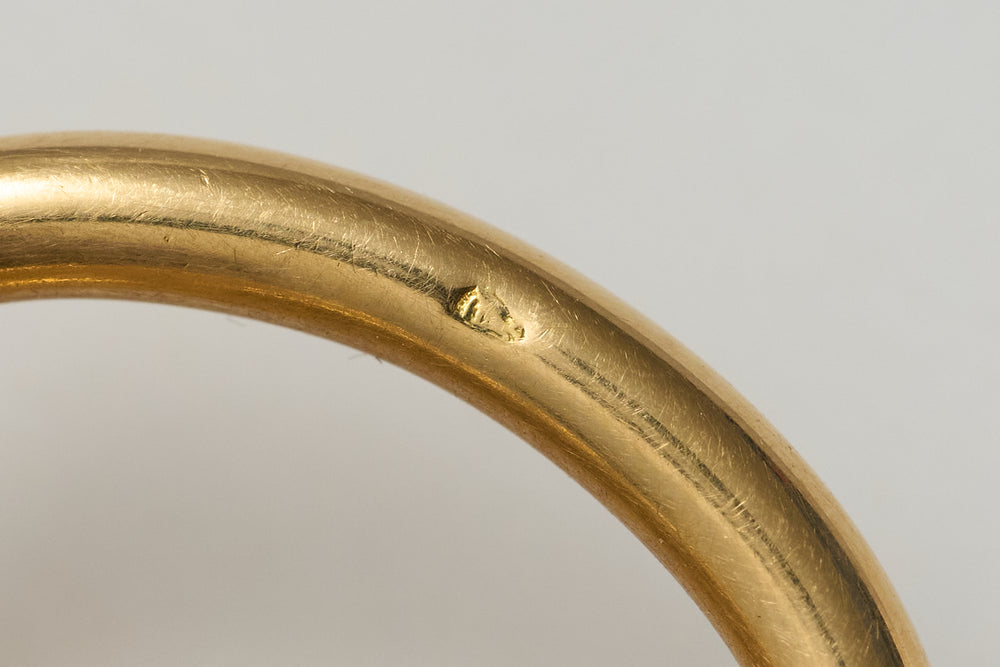
Mark 1
French horse-head guarantee
The horse-head poinçon for 18-carat gold, used only until 1919, agreeing with the archived 1913 date.
case
gold
Mark 2
Écran Paramagnétique Breveté
The inner cover stamped for Leroy's patented anti-magnetic screen.
cover
patent
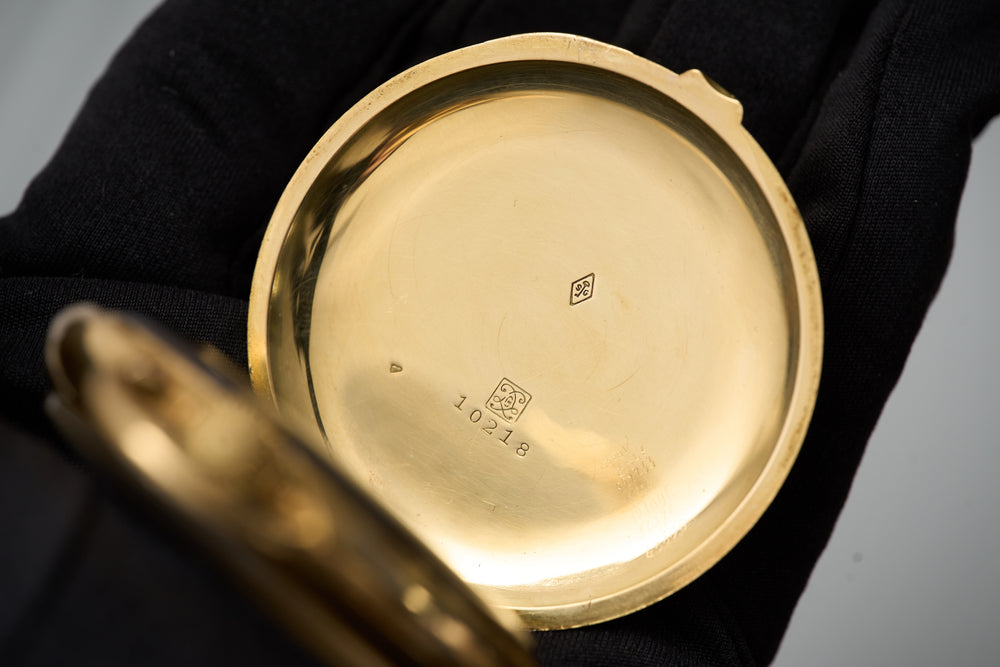
Mark 3
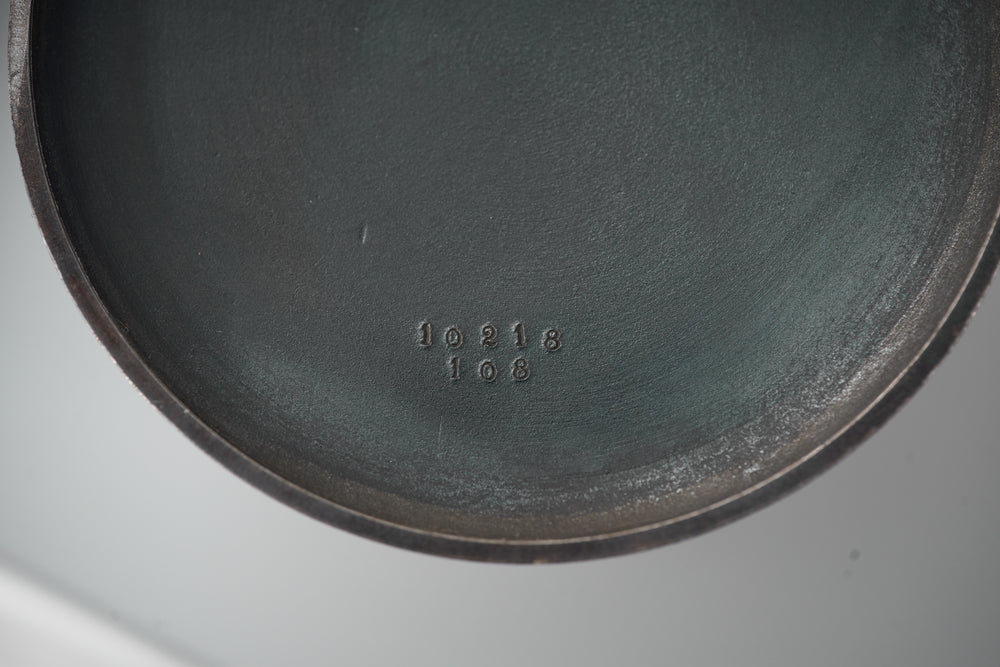
Watch & case numbers
Numbered 1349 and 10218, matching the archive extract.
numbers
archive
The Movement
Photography coming soon
This movement is awaiting its studio session.
Case
Excellent
18ct gold with light honest hairlines to the polished surfaces; the form is still sharp and the hallmarks clear.
Dial
Excellent
Flawless white enamel with no chips, hairlines or restoration; signature and printing crisp.
Movement
Excellent
Column-wheel chronograph in clean gilt with ruby jewels in gold chatons; winds and sets correctly through the crown, and the chronograph starts, stops and returns to zero cleanly.
Crystal
Excellent
Sound, with no chips or cracks.
Crown
Excellent
Secure, and houses the chronograph actuator.
51.94
This watch
25.75
€2 coin
A €2 coin is 25.75 mm. This case is more than two and a half times its area.
Room III · The Archive
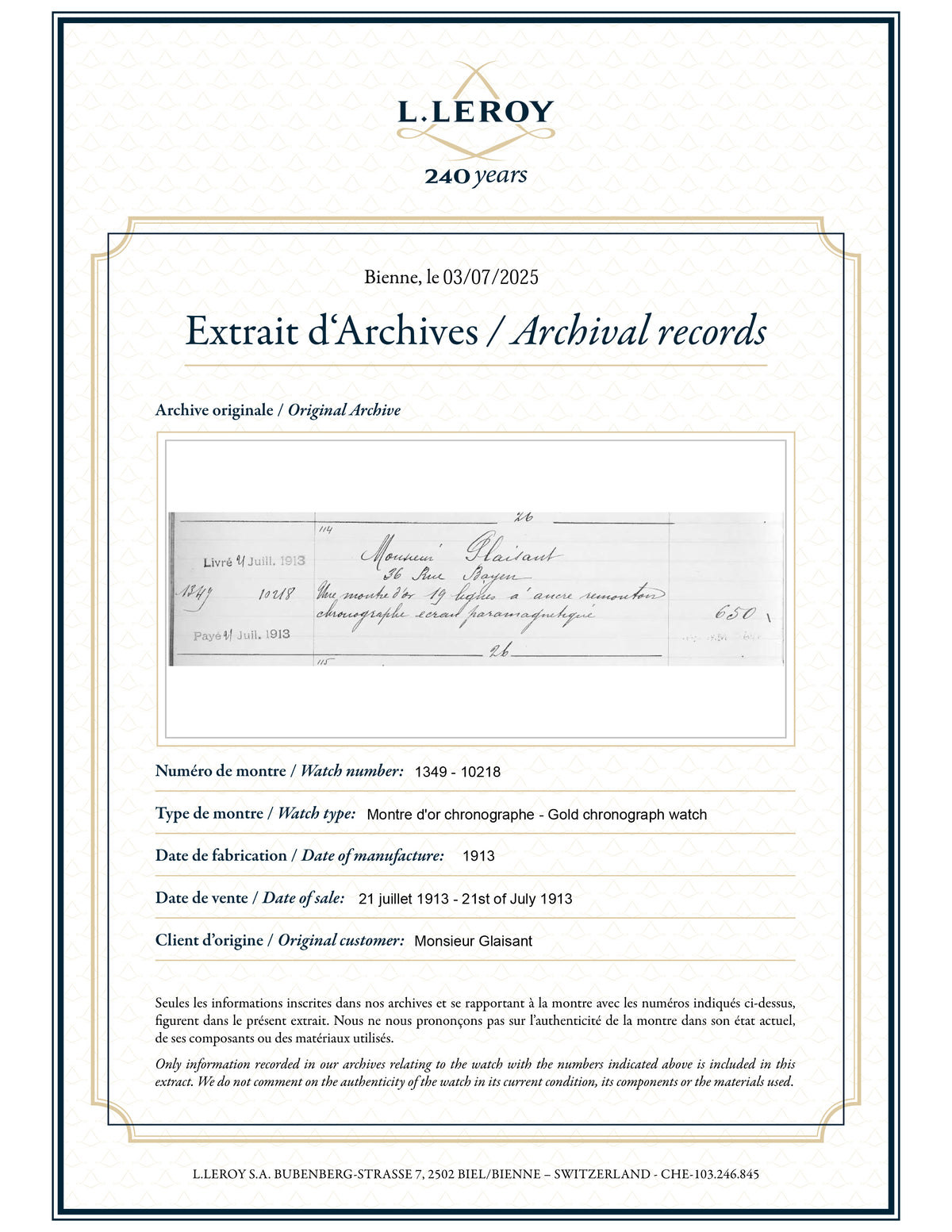
L. Leroy archive extract and the 1906 anti-magnetic patent.
Documented to the day it was sold
An extract from L. Leroy's own archives records this as watch 1349, case 10218, a gold chronograph 'écran paramagnétique', delivered and sold on 21 July 1913 to Monsieur Glaisant of 36 Rue Bayen, Paris, for 650 francs. A century on, the watch, its number and its first owner are still together on paper, alongside a copy of the 1906 patent.
- Maker
- L. Leroy & Cie, Paris (Horlogers de la Marine)
- Model
- Chronographe Écran Paramagnétique
- Case
- 18ct gold (750, French horse-head mark)
- Diameter
- 51.94mm
- Year
- 1913 (confirmed by L. Leroy archive extract)
- Watch no.
- 1349 / Case no.: 10218
- Weight
- 106.9g (complete)
- Movement
- Keyless manual wind, lever escapement, 19 lignes, column-wheel chronograph
- Functions
- Central chronograph seconds, instantaneous 60-minute register, running sub-seconds
- Feature
- Patented 'Écran Paramagnétique' anti-magnetic screen (Swiss patent 36525, 1906)
- Dial
- White enamel, slim Arabic numerals, fifths-of-a-second track, rose gold poire hands, blued chronograph hands
- Country
- France
- Accompanied by
- L. Leroy archive extract and a copy of the 1906 patent
The Estate Collection
Room IV · Acquisition
Price on Request
We’d love to discuss our passion for this piece with you.


L. Leroy & Cie
Price on Request
Enquiry
The Leroy Chronograph
×